Download our FREE Japan Planner Template →
We just spent several days exploring Kyoto, and after visiting temples, markets, bamboo forests and hidden local neighborhoods, we’ve narrowed down the absolute best 10 things to do in Kyoto.
And we’re not just covering the obvious tourist spots. We’ll also share where to find the most beautiful traditional streets, a day trip that completely exceeded our expectations, and a few places that influencers don’t tell you the full story about. Plus, at the end we’ll share some practical tips for getting around Kyoto and avoiding some of the biggest mistakes tourists make.
Watch the full video below, or keep scrolling for the written guide.
📍 Get every place in this guide pinned on Google Maps
Buy our Japan Travel Guide and get access to our Japan Maps, with every temple, restaurant and location we recommend in Kyoto already pinned for you. No more copying places one by one. Just open the map and go.
👉 Get the Ultimate Japan Travel Guide (with the pinned Google Maps)
Quick answer: The best things to do in Kyoto are Kiyomizu-dera Temple, a walk through Higashiyama and Gion, the Shirakawa Canal, lunch at Nishiki Market, Pontocho Alley at night, Fushimi Inari Shrine, the Arashiyama Bamboo Forest, exploring Arashiyama beyond the bamboo, a day trip to Nara and trying Uji matcha. Kyoto rewards early starts: most major attractions were pleasant around 9 AM, and crowds got significantly worse after 10:30 AM.
We’re starting our list with the best things to do in the Old Town of Kyoto, known as Higashiyama.
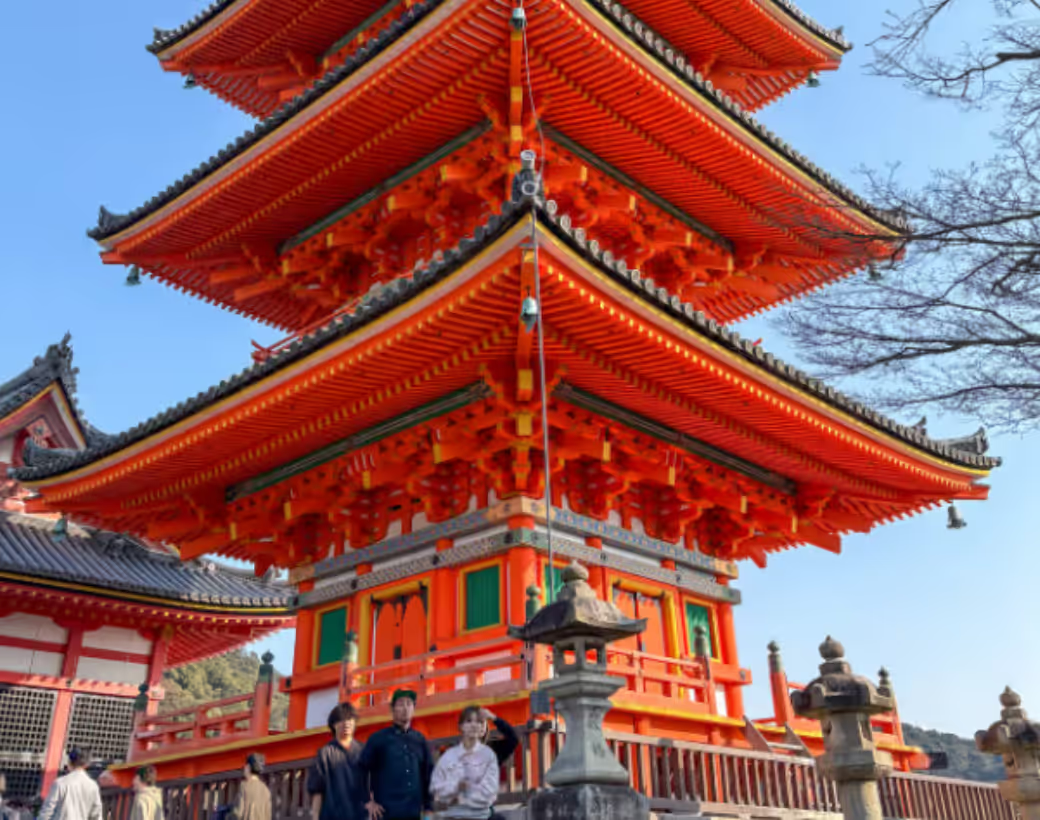
If there is one temple you absolutely shouldn’t skip in Kyoto, it’s this one. We honestly didn’t expect to be as impressed as we were. The temple sits on a hillside overlooking Kyoto and the views are incredible.
We visited close to sunset, and the views and light were very pretty. The lighting made the entire area feel magical. Entrance costs 500 JPY per person.
The walk to the temple is part of the experience too, with traditional streets, souvenir shops and beautiful architecture all around. Just expect hills and stairs.
Best for: Views, photos and your first taste of old Kyoto.
Best time to go: Close to sunset.
The area around Kiyomizu-dera is what many people picture when they think of Kyoto. In fact, this is the location of those famous pagodas: traditional wooden buildings, lantern-lined streets and historic temples around every corner. We recommend simply getting lost here and exploring.
During the day it gets incredibly busy (it’s also in hills, so expect to go up and down, with lots of souvenir shops). But after the shops close at around 6 PM, the crowds disappear and the streets become much more peaceful. There doesn’t seem to be anything to do after that time, although the streets are still very beautiful and charming with the traditional lights on.
When you head out of Kiyomizu-dera and into Gion, there’s still so much to see, and it’s also less crowded. There are quite a few temples and shrines to visit, and you can hit all of them in one day:
It’s great to walk around the area and pop in and out of temples.
Best for: Wandering, temples and traditional streets.
Crowd tip: Very busy during the day. The streets are much more peaceful after the shops close at around 6 PM.
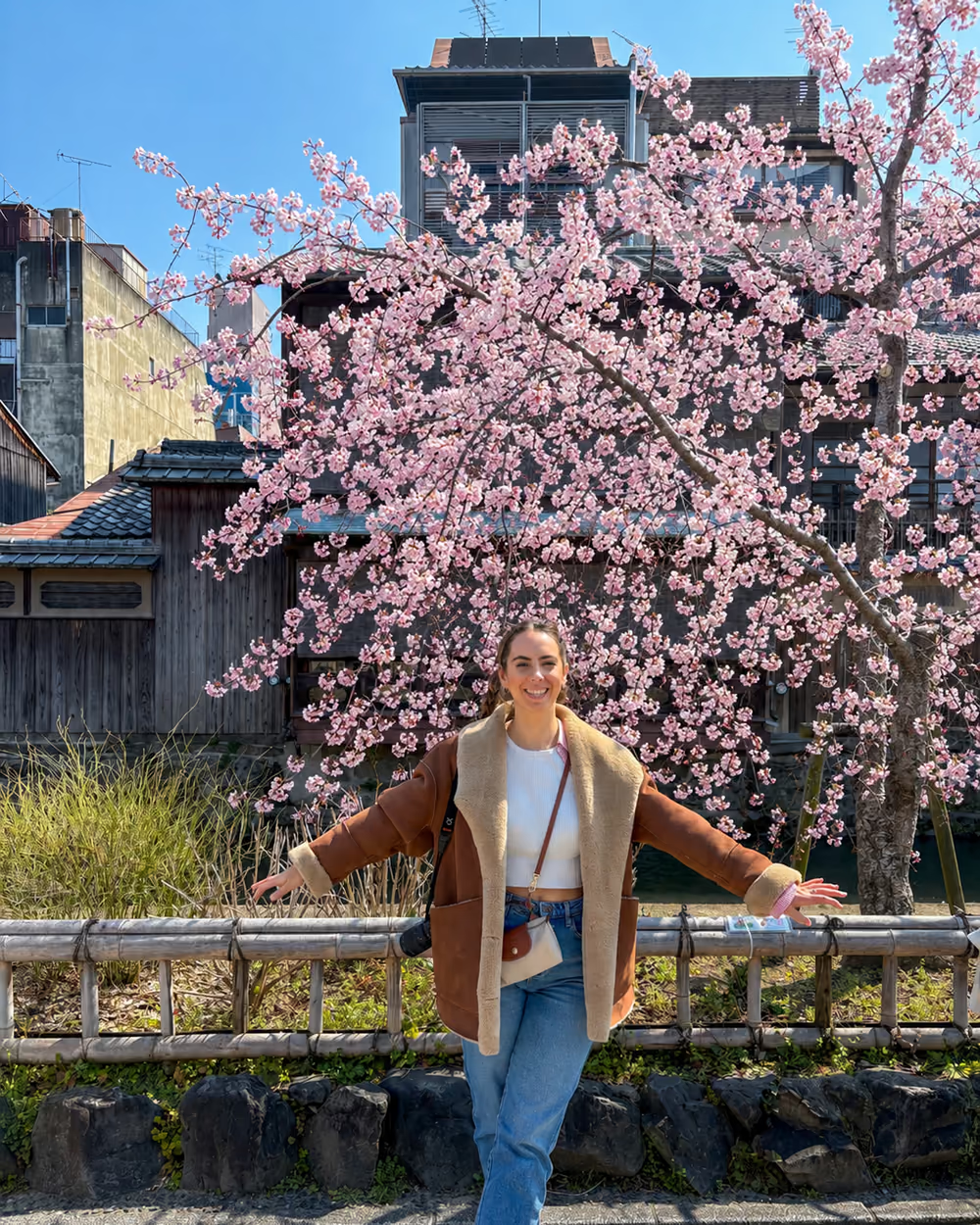
This ended up being one of our favorite surprises in Kyoto. It’s a beautiful canal lined with traditional buildings. During Sakura season, this place must look absolutely incredible.
It’s peaceful, photogenic and much less crowded than many nearby attractions. Definitely worth adding to your walking route through Gion.
From here, we started heading into downtown. Don’t forget to spend time by the Kyoto river. It’s so relaxing and charming!
Best for: A peaceful, photogenic stop.
Nishiki Market is one of Kyoto’s most famous food markets: a long, narrow street packed with food stalls and local specialties. It’s the perfect place to sample lots of different foods, and the food here is super tasty, with so many good-looking stalls.
It was quite crowded, but it never felt overwhelmingly crowded, and we were still able to find pockets of places to eat without feeling overwhelmed.
We found some excellent wagyu here. Our favorite stall was “Steak & Wine Restaurant,” which has tables to sit at, where we paid around 1,450 JPY per wagyu skewer. The meat was very delicious and we recommend it!
Best for: Lunch, wagyu and sampling lots of local specialties.
Pontocho Alley is one of Kyoto’s most famous evening spots: a narrow, lantern-lit alley packed with restaurants. It’s very atmospheric, but it does feel quite touristy nowadays. It can feel a little overwhelming, and the restaurants can seem like a tourist trap. Many have very similar menus, serving Kobe wagyu steak and sushi.
We recommend walking through for the atmosphere, but doing some research before choosing where to eat, and even booking in advance. You have to find the more local gems if you prefer to avoid the tourist spots.
We ended up in a delicious ramen specialty shop called Ramen Sugichiyo, which has great reviews and which we highly recommend. They serve one ramen only, and it was delicious! We paid 2.5K JPY for 2 people (2 ramen and gyoza).
The area around Pontocho in downtown is also amazing for dinner, and it’s so lively at night. This was a surprise, because our hotel area felt very empty at night. It can be a good area to stay at if you want to be close to the night action.
Best for: Atmosphere and dinner, if you do your research first.
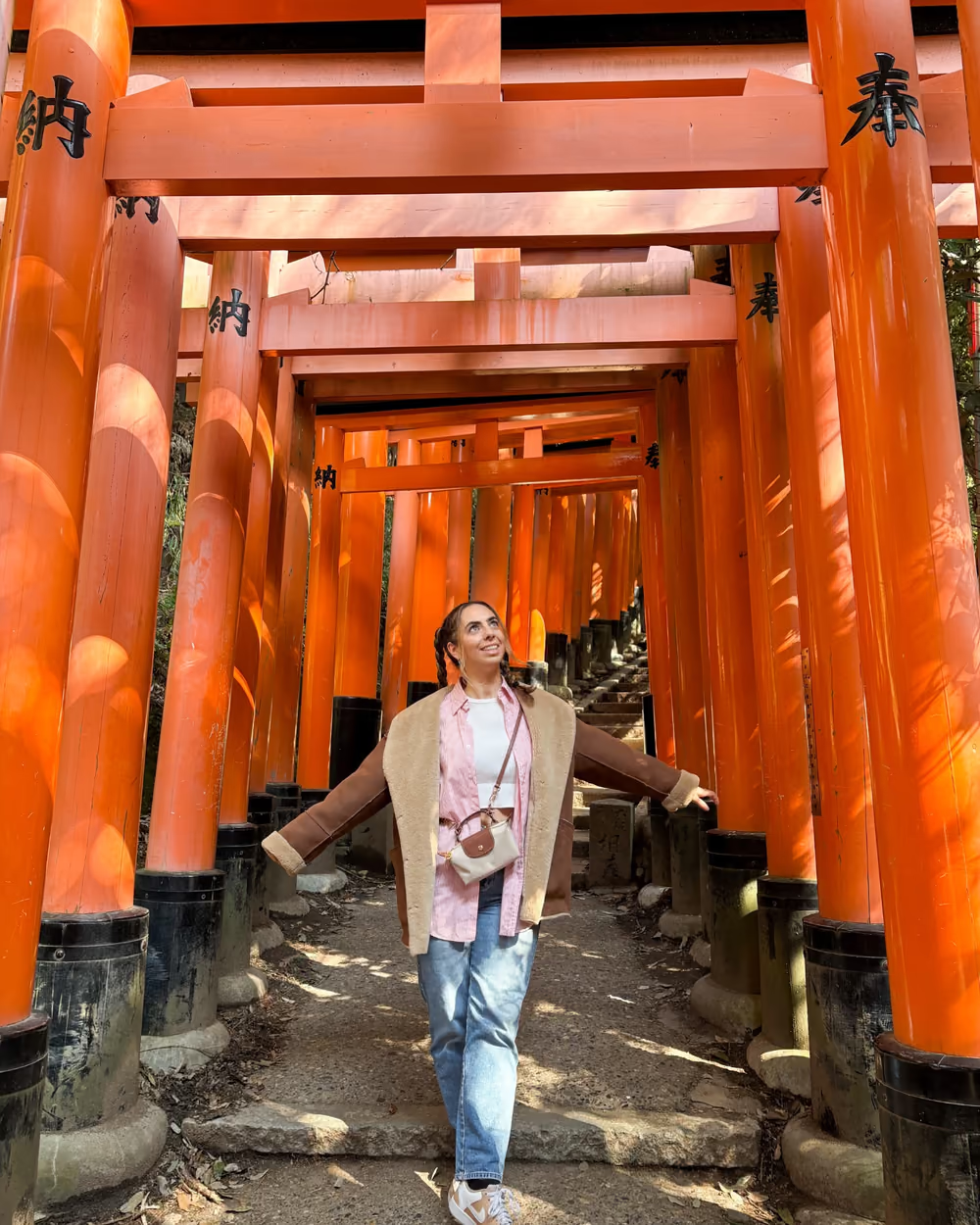
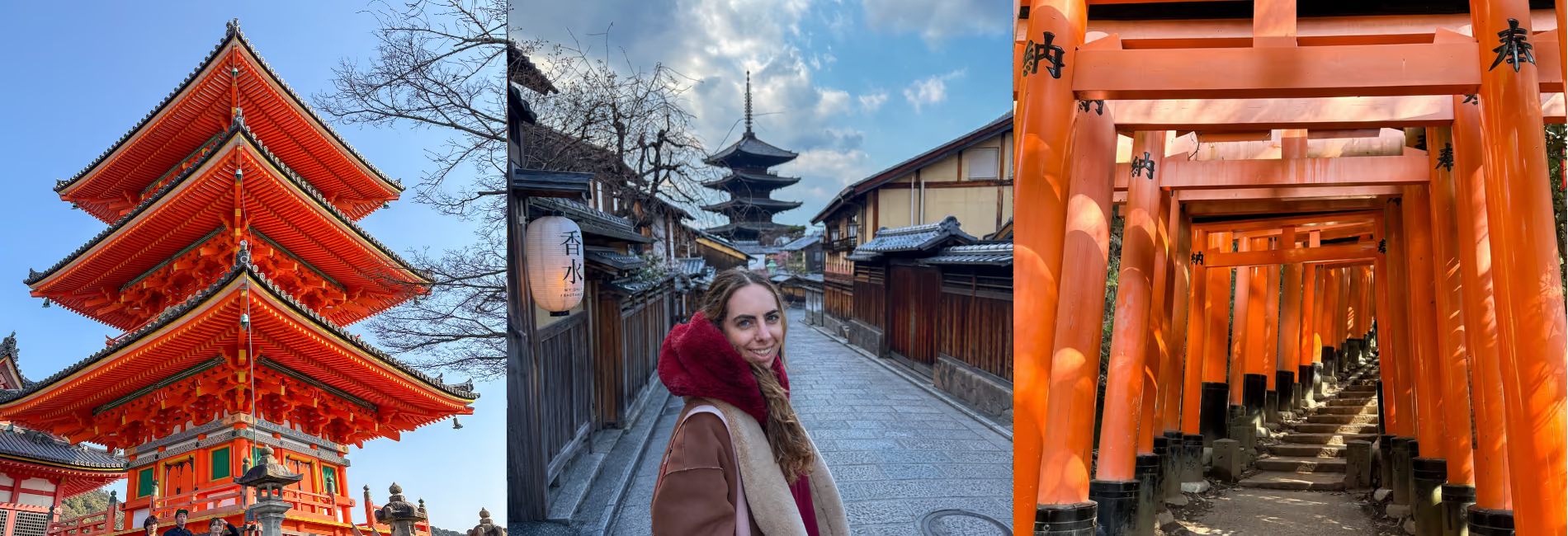
Moving away from Kyoto center, Fushimi Inari is probably the most famous shrine in Kyoto. You have to take the train to get there, but it only takes about 20 minutes from the old town. It’s home to thousands of red torii gates winding up the mountain.
Ignore the advice telling you to arrive at 6 AM. We arrived at 9 AM and crowds were still very manageable. It only became noticeably busy around 10:30 AM.
The full hike to the summit and back took us around 2 hours. The higher you go, the fewer people you’ll encounter, and there were several moments where we had entire sections of the path to ourselves, so we could take photos with no people in the background. There are other temples and paths to see, but we didn’t do those.
A few more things to know:
Best for: Torii gates and a good hike.
Best time to go: Around 9 AM, no need for 6 AM.
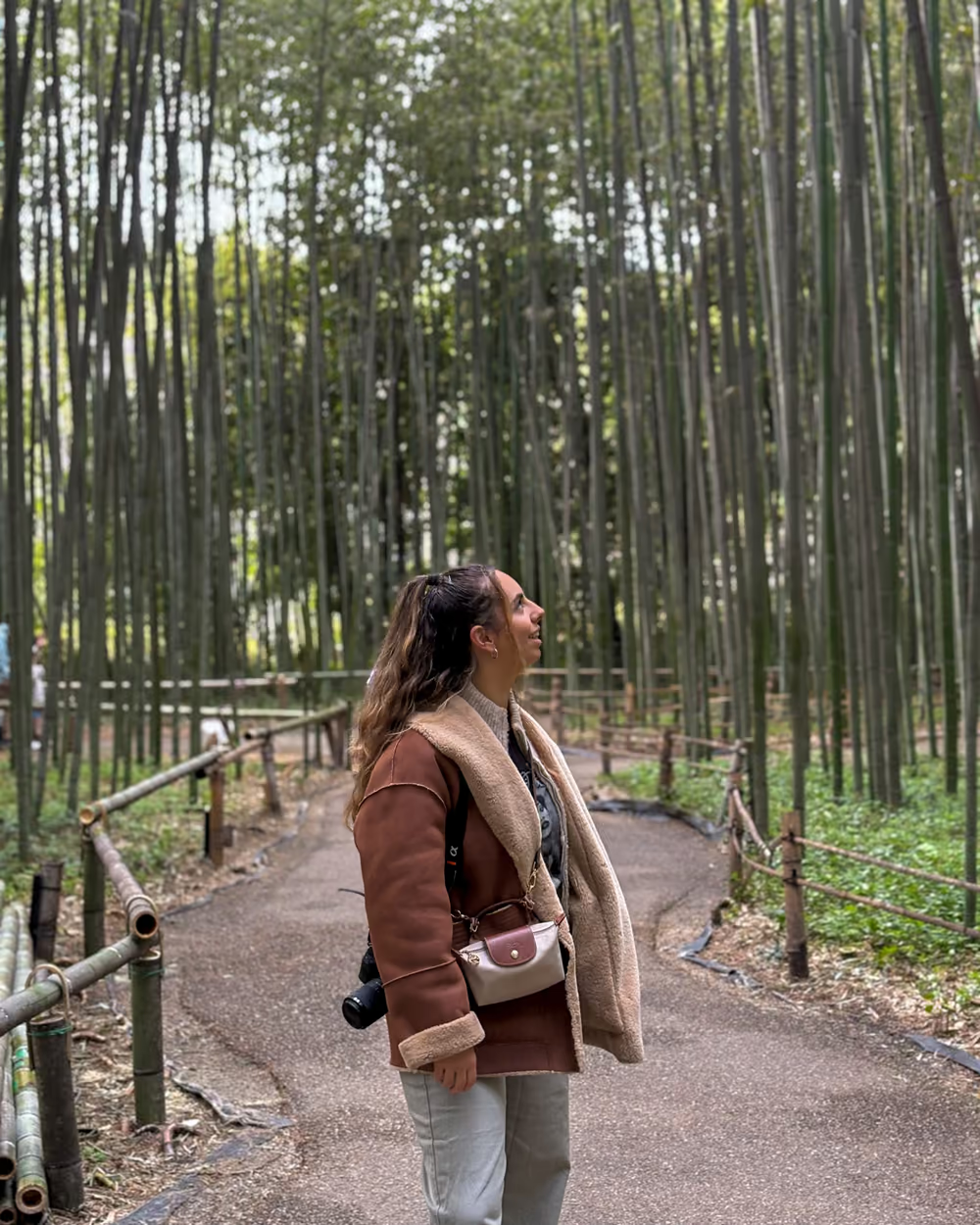
Now we go to a completely different area, in the forest. The Arashiyama Bamboo Forest is one of Kyoto’s most famous attractions, and honestly? It was much better than social media made us expect.
There is no official or paid entrance. The forest is just there, and there are a number of paths you can walk through to experience it.
We arrived at 9:15 AM. There were people around, but nowhere near the chaos we were expecting. It was not crowded like influencers say, and it was very pleasant to walk around.
Best for: A walk among the bamboo, plus a Zen temple.
Best time to go: Around 9:15 AM. The whole area got super busy at about 10:30 AM and stayed busy until we left.
This is where most tourists make a mistake: they visit the bamboo forest and leave. Arashiyama itself is absolutely worth exploring. It has quiet streets, traditional houses, temples everywhere and beautiful mountain scenery, with a much more relaxed atmosphere than central Kyoto. We ended up spending far longer here than we expected.
There are many, many temples you can visit, but they are all paid entrance, for about 500 JPY per adult. One of the things we really enjoyed was walking up the town all the way to Adashino Nenbutsuji Temple, and we highly recommend doing that. It has a very interesting layout and history, different to all the other temples.
Honest note: influencers on Instagram make it seem like this is an alternative bamboo forest, but it’s actually just a staircase surrounded by bamboo. It’s not a large section or anything like that. Go for the temple itself, not for a second bamboo forest.
Towards the end of the day, we also headed to the Arashiyama river, by the Togetsukyo Bridge. This completely caught us by surprise. We initially thought it would be a quick photo stop, but instead it became one of our favorite places in Kyoto: a beautiful pathway with a huge river surrounded by mountains. There are lots of cafés, restaurants and matcha shops, so it’s the perfect place to grab a bite and enjoy the views. We spent a long time simply sitting by the water. It feels incredibly relaxing, with the sound of the water and the views of the surrounding mountains.
Bring cash. Most of Arashiyama is cash only.
Best for: Slowing down, temples and sunset by the river.
📋 Planning your trip to Japan? Download our free Japan Planner to keep your hotels, places to visit and budget all in one place.
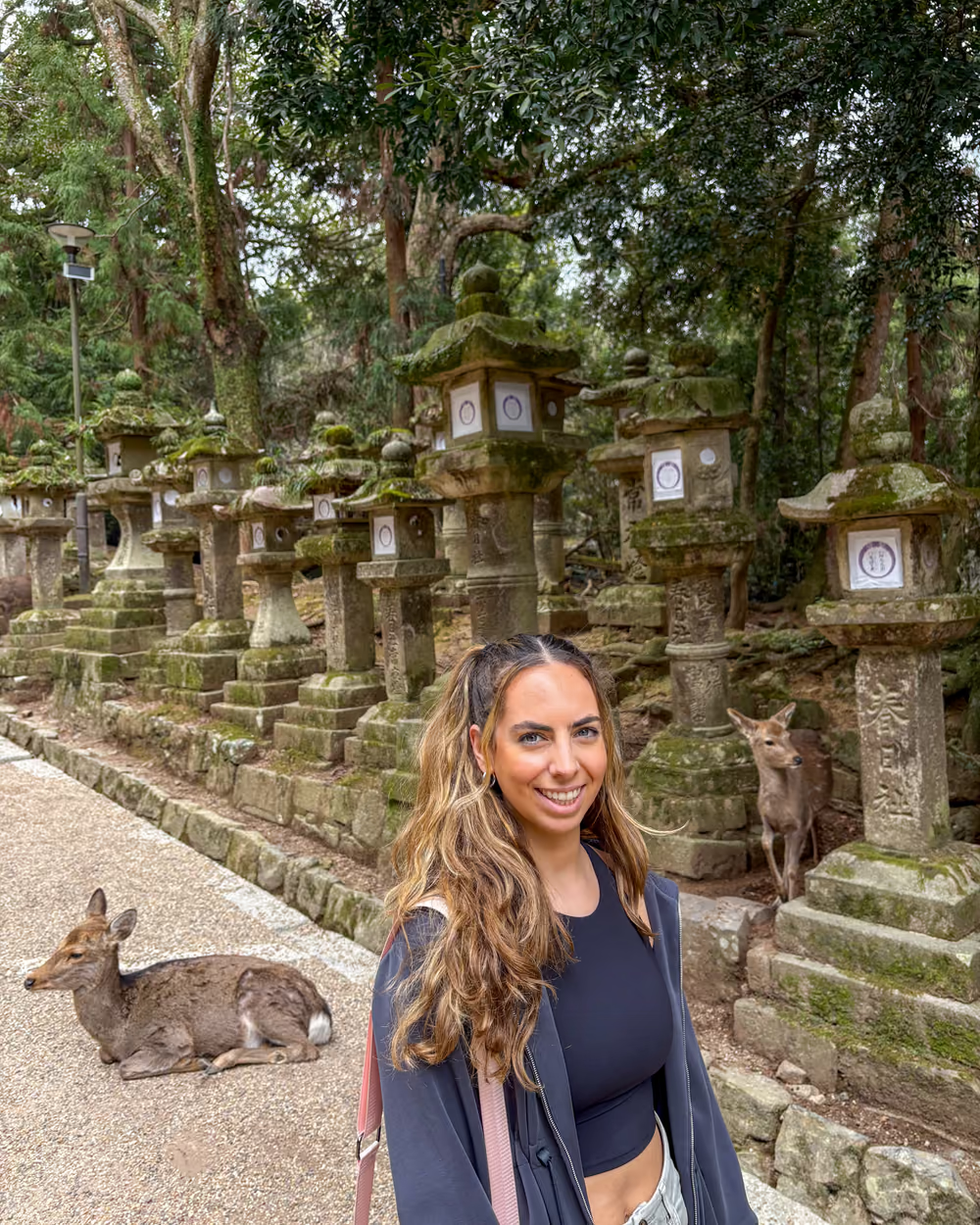
If you have an extra day in Kyoto, this is our number one recommendation. The journey takes about one hour. Nara is home to hundreds of free-roaming deer, but remember they can get aggressive if they think you have food. Follow the rules and respect the animals: don’t pet them, tease them with food or chase them. They can bite you and chase you, so be careful.
Getting there: we took the train from Kyoto and had to change trains once at Tambabashi Station. Here, you can either take the Limited Express or the local line (labelled “Nara Express,” yes, it’s confusing!). The limited express needs a physical extra ticket from a machine at the station and costs 500 JPY on top of the local fare (almost 1,000 JPY). The local train doesn’t have this fee, and the limited express is only slightly faster (5 to 10 minutes less).
What to do in Nara:
We left Kyoto at 8:15 AM and were back at the hotel by 3:30 PM.
Best for: Deer, temples and a full, easy day trip.
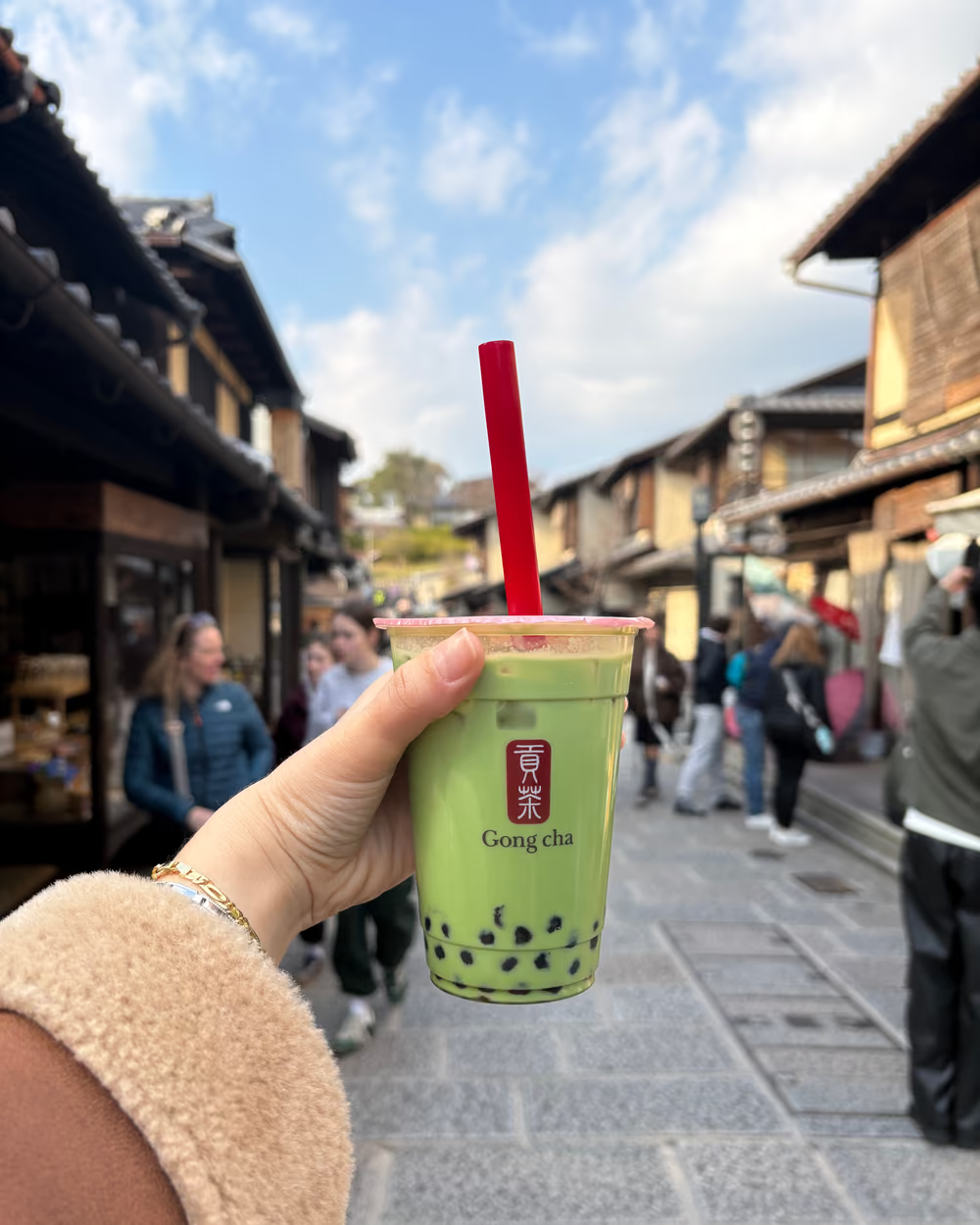
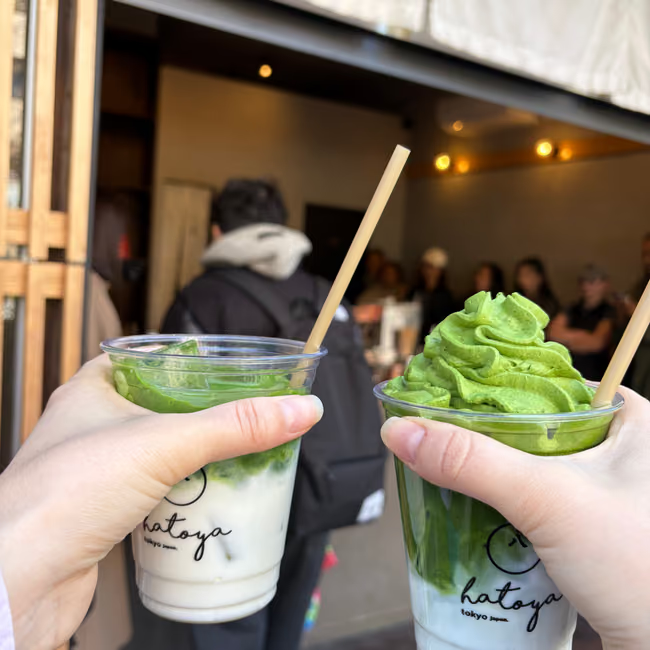
If you’re a matcha fan, Kyoto is one of the best places in Japan to try it. Kyoto is famous for Uji matcha. Uji is a region near Kyoto that produces high quality matcha. The majority of the matcha shops in Kyoto will serve Uji matcha, and it’s the best place to take matcha home with you or to buy it as gifts.
We found a branch of Gong Cha in the old town serving a special Uji matcha menu, and it was the best boba matcha I’ve ever had. It’s only available at this branch, the drinks were excellent, and we loved that we could personalize our drink (you choose how much ice, how much sugar, etc.).
Best for: Matcha fans.
| # | What | Area | Cost | Our tip |
|---|---|---|---|---|
| 1 | Kiyomizu-dera Temple | Higashiyama | 500 JPY | Go close to sunset |
| 2 | Higashiyama & Gion | Old Town | Free | Quieter after 6 PM |
| 3 | Shirakawa Canal | Gion | Free | Must be stunning in Sakura season |
| 4 | Nishiki Market | Downtown | Wagyu skewer ~1,450 JPY | Look for stalls with seating |
| 5 | Pontocho Alley | Downtown | Ramen + gyoza for 2: 2.5K JPY | Research and book ahead |
| 6 | Fushimi Inari Shrine | 20 min by train | Free | Arrive around 9 AM |
| 7 | Arashiyama Bamboo Forest | Arashiyama | Free | Arrive around 9:15 AM, try the side trails |
| 8 | Arashiyama beyond the bamboo | Arashiyama | Temples ~500 JPY | Bring cash |
| 9 | Day trip to Nara | 1 hour by train | Todai-ji 800 JPY | Walk past the crowded park entrance |
| 10 | Uji matcha | Old Town | n/a | Try the Uji matcha menu at Gong Cha |
This is how we did Kyoto, in case it helps you plan:
Two local places we also recommend from our first day:
Want the full route across Japan? See our Japan 14-Day Itinerary, or download our free Japan Planner to build your own.
When you arrive at Kyoto Station, don’t join the huge taxi queue. Walk across the road towards the Ibis Hotel and order an Uber from there. Much faster.
Kyoto’s new town feels very industrial, so it seems better to stay in the old town (if you can, stay within a 10-minute walk). Also, unlike Tokyo, Kyoto feels very empty at night, even going out for dinner felt very empty in our hotel area. If you want to be close to the night action, the area around Pontocho is lively.
We compare every area and share our favorite hotels for every budget in our guide to where to stay in Kyoto.
Bring cash when visiting Arashiyama. Many businesses there still operate cash only.
Kyoto rewards early starts. Most major attractions were pleasant around 9 AM, and crowds became significantly worse after 10:30 AM. There’s usually no need to wake up at 5 AM or 6 AM like some influencers suggest.
🗺️ Want every Kyoto spot saved in one place?
Our Ultimate Japan Travel Guide comes with our Japan Maps, with all the temples, restaurants and locations we recommend already pinned. Open it on your phone, and you’ll always know what’s nearby.
Our top 10 are Kiyomizu-dera Temple, Higashiyama and Gion, the Shirakawa Canal, Nishiki Market, Pontocho Alley at night, Fushimi Inari Shrine, the Arashiyama Bamboo Forest, exploring Arashiyama beyond the bamboo forest, a day trip to Nara and trying Uji matcha.
Around 9 AM. You don’t need to go at 6 or 7 AM. We arrived at 9 AM and the crowds were low, and it only got noticeably busy around 10:30 AM. The full hike to the summit and back took us about 2 hours.
Yes. It was much better than social media made us expect. We arrived at 9:15 AM and it was not crowded like influencers say. Try the smaller side trails, which are quieter and often make for better photos.
Yes. There is no official or paid entrance. The forest is just there, with a number of paths to walk through. Nearby temples like Tenryu-ji cost around 500 JPY.
For the atmosphere, yes. It’s narrow, lantern-lit and very lively at night. But it feels quite touristy and many restaurants have similar menus, so research before choosing where to eat and book in advance.
Yes, it’s our number one recommendation if you have an extra day. The journey takes about one hour, and you get free-roaming deer, Todai-ji Temple and the quiet Naramachi Historic District.
500 JPY per person.
Skip the huge taxi queue. Walk across the road towards the Ibis Hotel and order an Uber from there. It’s much faster.
We recommend the old town, ideally within a 10-minute walk, because Kyoto’s new town feels very industrial. For more nightlife, the area around Pontocho is lively at night. Read our full guide to where to stay in Kyoto.
Bring cash for Arashiyama, where many businesses are cash only.
Kyoto completely exceeded our expectations. The famous attractions were great, but some of our favorite memories came from simply wandering through historic streets, finding local restaurants and slowing down.
Planning the rest of your trip? Read these next:
If you’re traveling to Japan soon, subscribe to our YouTube channel for the rest of our Japan series.
Nas & Alba